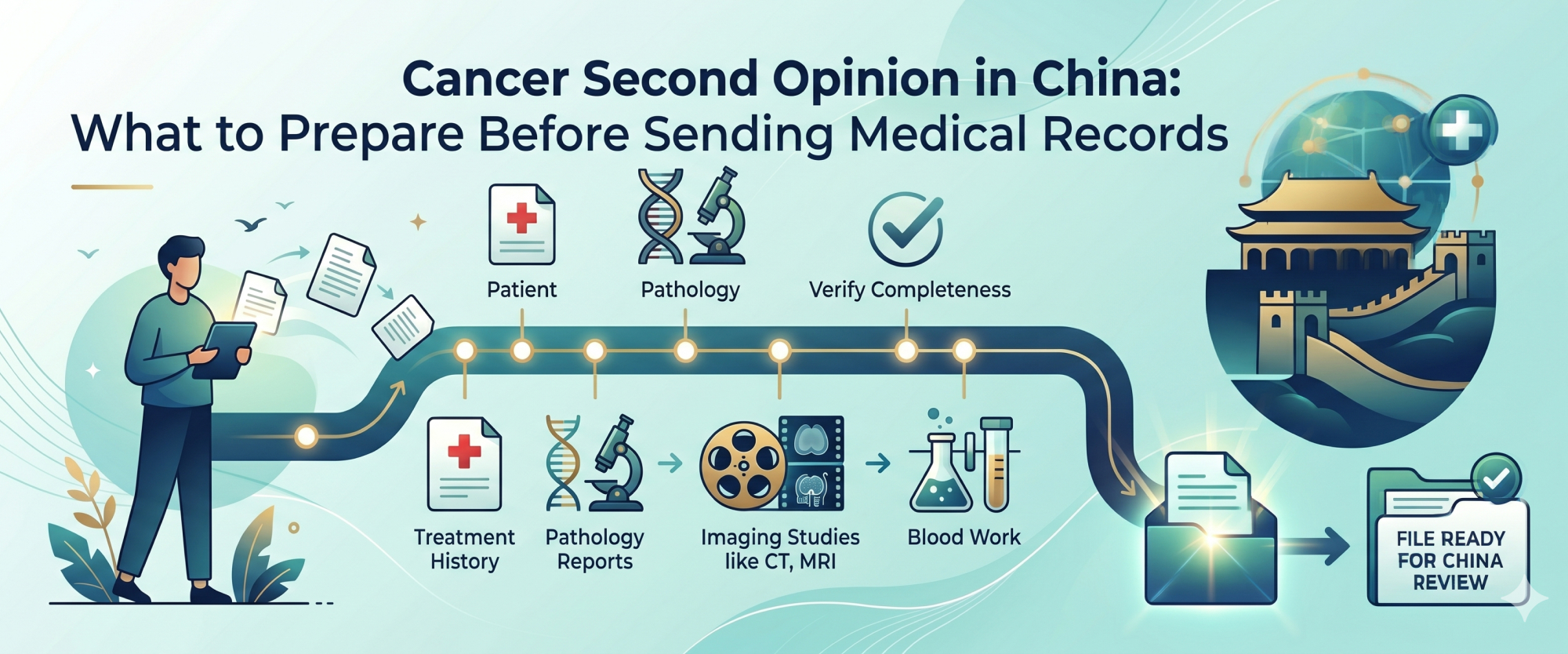


In China, medical records, test reports, imaging reports, image files, and discharge papers do not all move in the same way. Some stay with the patient more naturally. Some sit inside the hospital record system unless someone asks for a copy. Some work well in digital form. Some are easier to use later as printed documents.
This guide covers what documents exist in China’s hospital system, which ones matter most for follow-up care or insurance, and where and when to request them.
How Medical Records Usually Work in China
China’s record rules draw a clear line between outpatient care and inpatient care, and that difference shapes what patients usually take away.
For outpatient and emergency visits, the record usually stays closer to the patient side. For inpatient care, the hospital keeps the main chart after discharge and moves it into the archive. That is why an outpatient visit often ends with a smaller working file, while a hospital stay usually calls for a more deliberate set of discharge papers, reports, and copied records.
For international patients, the practical point is straightforward. A result inside the hospital system may work well during care in China. A result that needs to travel later works better when it also exists in a clear format outside that system.
If you are still getting familiar with how different hospitals work in China, it helps to read Understanding China’s Healthcare System and How to See a Doctor in China first.
The Records That Matter Most
The useful file usually stays quite focused. Some documents explain what happened during the visit. Some show the test result itself. Some help another doctor review the case directly.
| Document | Chinese | What it usually does |
|---|---|---|
| Outpatient medical record | 门诊病历 (ménzhěn bìnglì) | Shows the doctor’s notes, assessment, and treatment plan from that visit |
| Lab report | 检验报告 (jiǎnyàn bàogào) | Shows the result of blood work, urine testing, pathology, or other testing |
| Imaging report | 影像报告 (yǐngxiàng bàogào) | Gives the radiologist’s written reading of the scan |
| Imaging files | 影像资料 (yǐngxiàng zīliào) | Provide the scan itself for direct review |
| Discharge summary | 出院小结 (chūyuàn xiǎojié) | Gives the clearest short account of a hospital stay |
| Operative note | 手术记录 (shǒushù jìlù) | Shows what the surgical team did during the procedure |
| Pathology report | 病理报告 (bìnglǐ bàogào) | Gives the tissue diagnosis when pathology testing took place |
What Often Feels Different in China: Reports, Image Files, and Retrieval
The report and the image files do the same jobs in China as they do elsewhere. The difference usually lies in how patients access them during and after the visit.
In many large hospitals in China’s major cities, the written imaging report may appear in the hospital system first, while the image files follow a different retrieval route. One part may sit in the app, another may come from the radiology desk, a self-service kiosk, a CD, or a digital link. For a patient who plans to use the file later, that split matters.
It also helps to keep one more point in mind. A result that works smoothly inside the hospital’s own system may still need a more portable format later. A written imaging report may read clearly on screen, while the next doctor may still want the original image files for direct review.
Before leaving, it helps to confirm three things
- you have the written imaging report
- you have the image files in a format you can keep
- you know where both sit once you leave the hospital
Before You Leave After an Outpatient Visit
An outpatient file often stays manageable, but the key pieces still matter.
The visit record usually forms the center of that file. Once lab work or imaging enters the visit, the file becomes more useful when the written reports sit alongside the record rather than in separate places. If later review may happen outside China, the image files deserve the same attention as the written imaging report.
A practical outpatient file usually includes
| Item | Chinese | When it matters most |
|---|---|---|
| Outpatient medical record | 门诊病历 (ménzhěn bìnglì) | Follow-up visits, later clinical review, insurance support |
| Lab report | 检验报告 (jiǎnyàn bàogào) | Comparing results over time, sharing with another doctor |
| Imaging report | 影像报告 (yǐngxiàng bàogào) | Follow-up review, referral, insurance support |
| Imaging files | 影像资料(yǐngxiàng zīliào) | Specialist review, surgery planning, cross-hospital care |
| Prescription | 处方 (chǔfāng) | Clarifying medication and dosage after the visit |
| Itemized expense list | 费用清单 (fèiyòng qīngdān) | Billing review, reimbursement support |
| Official invoice (fāpiào) | 发票 (fāpiào) | Reimbursement, employer or insurer documentation |
A quick outpatient check before leaving
- Keep the visit record and the reports in one place
- Keep the imaging report and the image files together
- Save a personal digital copy if the files came through online retrieval
- Keep the billing papers with the medical file if insurance review may follow
If you want a clearer picture of how registration, payment, and document collection fit into the hospital visit itself, see How to See a Doctor in China and Hospital Payment Methods in China.
Before You Leave After a Hospital Stay
A hospital stay creates a fuller record, and the discharge papers usually become the core of the file.
The discharge summary often gives the clearest short account of the admission. When surgery took place, the operative record adds another layer of detail that may matter a great deal later. When pathology shaped the diagnosis, the pathology report belongs in the same set. Imaging and lab reports from the admission also carry more value when they stay grouped with the main discharge papers rather than scattered across separate folders.
A practical inpatient file usually includes
| Item | Chinese | When it matters most |
|---|---|---|
| Discharge summary | 出院小结 (chūyuàn xiǎojié) | Inpatient follow-up, overseas review, insurance support |
| Operative note | 手术记录 (shǒushù jìlù) | Surgical follow-up and later specialist review |
| Pathology report | 病理报告 (bìnglǐ bàogào) | Oncology care, surgical follow-up, later specialist review |
| Lab reports from the admission | 住院期间检验报告 (jiǎnyàn bàogào) | Reviewing key findings from the hospital stay |
| Imaging reports | 影像报告 (yǐngxiàng bàogào) | Follow-up review, referral, insurance support |
| Imaging files | 影像资料 (yǐngxiàng zīliào) | Specialist review, surgery planning, cross-hospital care |
| Discharge medication list | 出院带药清单 (chūyuàn dàiyào qīngdān) | Clarifying current treatment after discharge |
| Inpatient expense list | 住院费用清单 (zhùyuàn fèiyòng qīngdān) | Billing review, reimbursement support |
| Official invoice (fāpiào) | 发票 (fāpiào) | Reimbursement, employer or insurer documentation |
A quick discharge check before leaving
- Keep the discharge summary at the front of the file
- Add the operative record and pathology report when relevant
- Keep the imaging reports and image files together
- Keep the billing papers with the medical papers if insurance review may follow
- Make sure the name matches the passport across the full set
If the record set may later be used for reimbursement, it also helps to read Insurance Claims in China and Medical Insurance & Reimbursement in China.
Which Format Usually Helps Later
China recognizes paper and electronic medical records as equally valid.
In practice, though, different formats serve different purposes once the file leaves the hospital.
In many leading hospitals in China’s major cities, patients now see more of the record in digital form than before. That is a real advantage during care. For later use, though, the strongest file usually combines that digital convenience with a smaller set of printed core documents.
Digital files work well for
- personal storage
- quick reference
- keeping a backup copy
- saving reports and image files in one place
Printed documents often help more when the file needs to
- move to another hospital
- support an insurance review
- go to an overseas doctor
- document a hospital stay in a clearer way
A formal copied record with the hospital’s proof mark can also help when the receiving side wants a document that is easier to verify.
| Situation | Most useful format |
|---|---|
| Personal record keeping | Digital file plus backup |
| Follow-up with another doctor | Printed records plus digital image files |
| Insurance or reimbursement review | Formal billing papers plus supporting medical record |
| Complex inpatient follow-up | Printed discharge papers and copied key records |
Requesting Full Medical Records
For complex surgical cases or situations where an overseas specialist needs the full clinical picture, a discharge summary alone may not be enough. A fuller copied record set may include progress notes, nursing notes, laboratory flowsheets, consultation notes, and procedure records alongside the discharge summary and the main reports.
Chinese hospitals usually handle these requests through the Medical Records Office (病案室, bìng’àn shì).
In many hospitals, the process includes
- filling in a written application form
- presenting a passport or other ID for identity verification
- specifying which records are needed
- paying a copying fee where applicable
- waiting for the records to be prepared
Timing varies by hospital and by the scope of the request. A smaller request may move more quickly, while a broader inpatient file may take longer.
If a fuller copied record set may be needed later, it usually helps to ask about the process before leaving the hospital or before leaving China.
Using Chinese Medical Records Abroad
A few things are worth checking when Chinese medical records may later go to an overseas doctor, employer, or insurer.
Language
Records from standard public hospital departments are usually issued in Chinese. Some international departments and private hospitals may provide bilingual or English-language materials, but the format varies by facility. If the records may later go to an overseas doctor or insurer, it helps to confirm the available language options before the visit and arrange translation where needed.
Imaging file compatibility
Chinese hospitals commonly provide imaging files in DICOM format, which is the standard format used internationally. Many radiology systems and viewing apps can open DICOM files, but it still helps to confirm in advance whether the receiving doctor or institution has any specific format requirements.
Document verification
Some overseas institutions may want documents that are easy to verify. A printed record with an official hospital stamp can help in that situation. For fāpiào, China’s official tax verification channels allow authenticity checks using the invoice information on the document itself.
Insurance reimbursement
For overseas reimbursement, a commonly requested document set often includes the fāpiào, the itemized expense list, the medical record or discharge summary, and the main lab and imaging reports. Claims usually move more smoothly when the medical papers and the billing papers stay together as one clear set.
If the records may later go to an insurer, another hospital, or an employer, you may also want to read Insurance Claims in China, Medical Insurance & Reimbursement in China, and Visa & Entry Guide for Medical Care in China.
A Simple Way to Organize the File Before You Leave
A neat file works better than a large one.
One folder can hold the visit records and discharge papers. One folder can hold lab and imaging reports in date order. One folder can hold the image files. One folder can hold billing papers when reimbursement review may follow. This kind of structure makes later handoff much easier because another doctor can see the medical story in a clear order.
Before leaving, it helps to confirm four things
- the name on every document matches the passport
- the imaging report and the image files stay together
- the discharge papers and key inpatient records sit in one place
- a digital backup exists before the trip home
This final check usually takes less effort than trying to rebuild the file later.
GET IN TOUCH
Need a Clearer Plan for Which Records to Keep?
When care in China may lead to follow-up somewhere else, it helps to sort out the record set before the trip ends. The most useful questions are often simple: which papers should travel as formal copies, which scans should stay in their original image format, and which reports work well in digital form.
FAQ
Q1. Can patients request copies of medical records in China?
Yes. Hospitals can provide copied record materials through their records request process. Patients commonly request copied records when follow-up, insurance review, or later specialist review may require more than the standard visit papers.
Q2. Can I access test results through the hospital app?
Many large hospitals in China’s major cities now show lab results, report inquiries, and some parts of the medical record through their app or WeChat mini program. Access to imaging reports and imaging files can follow a different route, so it helps to confirm the collection method with the hospital before you leave.
Q3. Can I get my records in English?
Records from standard public hospital departments are usually issued in Chinese. Some international departments and private facilities offer bilingual or English summaries. For overseas use, certified translation is often the practical route when English documentation is required. Confirm the language options available when you book.
Q4. What if I need full inpatient records after returning home?
Hospitals in China usually handle copied inpatient record requests through the Medical Records Office. Patients or their authorized representatives can apply for copied records, but the exact process varies by hospital. If a fuller copied record set may be needed later, it usually helps to ask about the process before leaving the hospital or before leaving China.
Q5. The name on my hospital documents does not match my passport. Does that matter for insurance?
Yes. A name mismatch can complicate insurance review and document verification later on. If you notice a discrepancy while still at the hospital, it helps to ask the registration or billing desk whether it can be corrected before you leave.
Q6. The hospital gave me a QR code for my imaging files instead of a CD. Is that reliable for overseas use?
If your imaging files are provided through a QR code or hospital system, it helps to download and save a personal copy before leaving China. That usually makes later access easier if the files need to go to an overseas doctor or another hospital.