
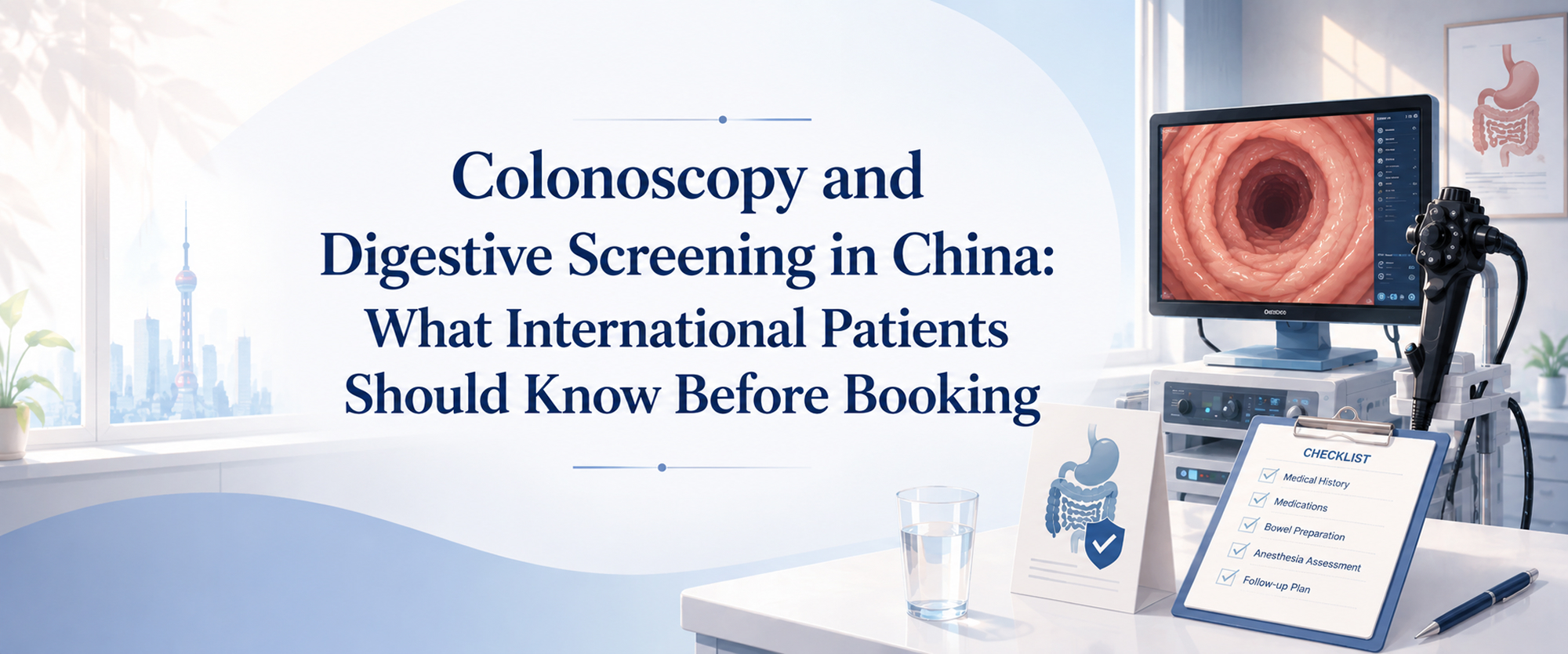
Digestive screening in China often starts with a practical question: can gastroscopy, colonoscopy, or same-day upper and lower endoscopy fit into a health check-up, a trip to China, annual screening, or a family-history review? The package name gives only part of the picture. Endoscopy involves preparation, consent, medical history review, and follow-up planning, especially when the booking includes sedation or possible biopsy.
China’s health check-up system often separates routine screening from procedure-based tests. A standard check-up may include blood work, urine testing, stool testing, ECG, ultrasound, and imaging. Gastroscopy and colonoscopy follow a different path because the doctor examines the digestive tract directly and may take tissue samples or remove selected polyps during the procedure.
For international patients, the most useful planning work starts before the appointment date. The facility needs a clear medical history. The patient needs clear preparation instructions. Sedated endoscopy brings anesthesia assessment, recovery time, and an escort requirement into the plan. The pathology report often follows the endoscopy report, so short-stay visitors benefit from a follow-up plan while they still have easy access to the facility.
Digestive Screening and Routine Health Check-ups
A routine health check-up gives a broad health baseline. China’s 2025 adult health check-up guidance describes adult check-ups as medical examinations that help clinicians understand a person’s health status and identify early signs of disease or health risk. The guidance organizes adult screening around a self-assessment questionnaire, basic examination items, and deeper chronic-disease risk screening when a person’s history or risk profile supports it.
Digestive endoscopy has a more targeted role. Gastroscopy examines the upper digestive tract. Colonoscopy examines the colon and rectum. These tests let the doctor see the digestive tract lining directly, take biopsy samples, and manage selected findings during the same visit when the doctor considers it appropriate.
| Screening item | Main role | Practical planning point |
|---|---|---|
| Routine health check-up | Broad baseline review through labs, ECG, ultrasound, imaging, and selected add-ons | Usually package-based and often built around a morning schedule |
| Stool occult blood test | Looks for hidden blood in stool | A positive result usually leads to clinical review |
| Gastroscopy | Examines the esophagus, stomach, and duodenum | Requires fasting and may include biopsy |
| Colonoscopy | Examines the colon and rectum | Requires bowel preparation and may include polyp removal |
| Sedated endoscopy | Uses sedation or anesthesia for gastroscopy, colonoscopy, or both | Adds anesthesia review, escort, recovery, and activity planning |
A person comparing digestive screening with a wider check-up may first read Health Check-ups in China: A Complete Guide for International Visitors.
Gastroscopy, Colonoscopy, and Painless Endoscopy
Chinese facilities often use the term “painless” for sedated gastroscopy or sedated colonoscopy. The term refers to the patient’s experience during the procedure. The medical workflow includes preparation, risk review, monitoring, and recovery.
Gastroscopy
Gastroscopy examines the upper digestive tract. Doctors may discuss it when a person has upper abdominal discomfort, reflux-like symptoms, anemia, swallowing symptoms, a history of gastric lesions, Helicobacter pylori-related concerns, or a relevant family history. China’s 2024 gastric cancer screening plan places endoscopic examination at the center of high-risk gastric screening and uses biopsy for suspicious lesions.
Colonoscopy
Colonoscopy examines the colon and rectum. Doctors may discuss it for colorectal screening, blood in stool, bowel habit changes, prior polyps, inflammatory bowel disease follow-up, or family history of colorectal cancer. China’s 2024 colorectal cancer screening plan covers high-risk definitions, screening methods, screening frequency, early diagnosis, treatment principles, and follow-up management.
Combined gastroscopy and colonoscopy
Some facilities can perform gastroscopy and colonoscopy in one appointment block. A combined appointment requires both sets of preparation: fasting for the upper digestive tract and bowel cleansing for the colon. When the visit includes sedation, the schedule also needs recovery time and an escort after discharge from the endoscopy area.
Medical History, Medication Lists, and Anesthesia Assessment
Sedated endoscopy brings anesthesia into the plan. The facility may ask about heart disease, lung disease, asthma, stroke history, sleep apnea, diabetes, liver or kidney disease, prior anesthesia reactions, loose teeth, dentures, pregnancy status, and recent infections. Older age, abnormal ECG, abnormal liver or kidney function, and chronic disease history often trigger a more detailed anesthesia assessment.
Prepare a one-page medical file before booking:
- Current medications, with dose and frequency.
- Blood thinners and antiplatelet drugs, such as aspirin, clopidogrel, warfarin, or newer anticoagulants.
- Diabetes medication and insulin schedule.
- Blood pressure and heart medication.
- Allergy history, including anesthesia, antibiotics, latex, adhesives, and contrast agents.
- Major diagnoses, prior surgery, prior endoscopy, previous polyps, and pathology results.
- Family history of gastric cancer, colorectal cancer, advanced polyps, or inflammatory bowel disease.
Medication history matters because endoscopy can move from screening to intervention. A doctor may take a biopsy or remove a polyp. Anticoagulants and antiplatelet drugs can affect bleeding risk. Diabetes medication can affect fasting and bowel preparation. Heart and lung conditions can affect sedation planning.
For general outpatient flow in China, including registration, payment, and department routing, see How to See a Doctor in China: A Step-by-Step Guide for Foreigners.
Bowel Preparation and Diet Rules
Colonoscopy quality depends on bowel preparation. A clean colon helps the doctor inspect the mucosa and identify small lesions. Good preparation also helps the examination proceed more smoothly and gives the report stronger practical value.
Facilities give their own instructions after booking. Many plans include a low-residue diet before the test, a bowel-cleansing solution, and a schedule linked to the appointment time. Morning and afternoon appointments may use different preparation timing. Some centers use split dosing. Others give a single schedule based on local practice.
| Preparation point | What to confirm |
|---|---|
| Diet start time | When to start low-residue meals and when to stop solid food |
| Bowel preparation medicine | Name, dose, mixing method, and drinking schedule |
| Stool target | What the facility considers an adequate preparation result |
| Medication plan | How to handle diabetes, blood pressure, heart, anticoagulant, or antiplatelet medication |
| Arrival time | Check-in time, procedure time, and observation time |
| Sedation plan | Escort requirement, recovery area, and activity limits |
Gastroscopy preparation usually centers on fasting. The facility sets the exact fasting time according to the appointment, sedation plan, and medical history. A combined gastroscopy and colonoscopy follows both upper and lower digestive preparation rules.
Examination Day Flow in China
The examination day often starts with an identity check and document review. International patients should bring the passport or identity document they used when booking. If the hospital system uses a Chinese app or WeChat mini program, first-time passport registration may require help at a service counter.
A typical endoscopy visit may follow this route:
- Check in with passport, appointment record, and test order.
- Bring pre-procedure test results when the facility asks for them.
- Review consent forms and confirm sedation choice.
- Confirm allergies, medication history, fasting status, and bowel preparation.
- Enter the procedure area.
- Complete gastroscopy, colonoscopy, or both.
- Recover in the observation area when sedation applies.
- Collect the endoscopy report through the facility’s report system or at the report desk.
- Check the pathology result timeline if the doctor took a biopsy sample or removed a polyp.
Sedated endoscopy usually changes the rest of the day. Facilities commonly ask patients to avoid driving, alcohol, major work decisions, and strenuous activity during the recovery period. An adult escort may need to stay through check-in, recovery, and discharge.
Polyps, Biopsy, Pathology, and Follow-up
Colonoscopy may find polyps. The doctor may remove selected small polyps during the examination, take a biopsy, or schedule a separate therapeutic endoscopy when the lesion requires more time, equipment, or risk planning. Size, shape, location, number of lesions, visual features, medication history, and bleeding risk all affect the decision.
The endoscopy report and pathology report answer different questions.
| Document | What it tells you |
|---|---|
| Endoscopy report | What the doctor saw, where the finding appears, and what the doctor did during the examination |
| Procedure note | Whether the doctor took biopsy samples, removed a polyp, or planned another step |
| Pathology report | What the tissue examination found |
| Follow-up advice | When to return, which department to see, and whether further testing or treatment discussion fits |
China’s colorectal cancer screening plan uses follow-up management according to screening findings and risk. A normal colonoscopy, adenoma, advanced adenoma, inflammatory bowel disease, hereditary risk, or colorectal cancer finding leads to different follow-up planning. China’s gastric cancer screening plan also links follow-up to endoscopic findings, pathology, and risk level.
For help using a Chinese report after a screening visit, see Health Check-up Results in China: Reading Your Report and Using It.
Follow-up Planning After Digestive Screening
A single gastroscopy or colonoscopy gives valuable information for that time point. Doctors set long-term digestive follow-up according to age, symptoms, family history, prior findings, Helicobacter pylori status, inflammatory bowel disease history, medication changes, and the quality of the original examination.
Screening identifies findings that warrant attention. A doctor’s clinical evaluation turns those findings into a diagnosis and follow-up plan.
A useful follow-up plan usually answers three questions:
- What did the endoscopy show visually?
- Did pathology confirm a tissue diagnosis?
- When should the next review, repeat test, or clinic visit take place?
For short-stay visitors, report timing matters. The endoscopy report may come out soon after the procedure. The pathology report often follows later. Visitors with a tight travel schedule benefit from confirming result delivery, report explanation options, and document collection while they still have easy access to the facility.
For documents that travel across systems, see Medical Records & Imaging in China: A Guide for International Patients.
Questions to Confirm Before Booking
Digestive screening works best when patients confirm practical details before the appointment date. This matters especially for visitors with limited time in China.
| Question | Why it matters |
|---|---|
| Which department or center handles the booking? | Some facilities route endoscopy through gastroenterology, others through a check-up center or endoscopy center |
| Can gastroscopy and colonoscopy happen in one appointment? | Combined procedures need coordinated fasting, bowel prep, sedation, and recovery |
| Does sedated endoscopy require anesthesia assessment first? | Chronic disease, age, ECG, liver or kidney function, and prior anesthesia history may affect booking |
| What bowel preparation schedule fits my appointment time? | Timing often changes between morning and afternoon procedures |
| How should I handle blood thinners, diabetes medicine, and blood pressure medicine? | The plan depends on the medicine, the reason for taking it, and the procedure scope |
| What happens if the doctor finds a polyp? | Polyp removal, biopsy, pathology, and follow-up may change time, cost, activity limits, and report timing |
| When will the pathology report arrive? | The pathology report often follows the endoscopy report |
| Can the facility provide English support or an English summary? | Overseas doctors and insurers may need usable documents |
| Can the facility issue a fāpiào and itemized expense list? | Insurance claims often require formal billing documents |
GET IN TOUCH
Need to Arrange Digestive Screening During Your China Visit?
Preparing for gastroscopy, colonoscopy, or sedated endoscopy is easier when your medication list, allergy history, prior reports, and travel schedule are ready before booking. Ask what the facility requires for bowel preparation, anesthesia assessment, report timing, and follow-up before your visit.
FAQ
Q1. Is colonoscopy in China part of a normal health check-up?
Some health check-up packages list colonoscopy as an add-on, while the procedure usually follows a separate endoscopy workflow. The patient needs bowel preparation, consent, procedure instructions, and sometimes anesthesia assessment. A routine check-up gives a broad baseline, while colonoscopy lets the doctor inspect the colon and rectum directly.
Q2. What is the difference between gastroscopy and colonoscopy in China?
Gastroscopy examines the esophagus, stomach, and duodenum. Colonoscopy examines the colon and rectum. Gastroscopy mainly requires fasting. Colonoscopy requires bowel cleansing and a more detailed diet and medication plan.
Q3. What does “painless colonoscopy” mean in China?
Many Chinese facilities use “painless colonoscopy” for sedated colonoscopy. The patient usually sleeps through the procedure while the clinical team monitors breathing, circulation, and recovery status. The sedated route adds anesthesia review, an escort requirement, and post-procedure activity limits.
Q4. Why does the facility ask about current medication before endoscopy?
Medication can change preparation, safety planning, and what the doctor can do during the procedure. Blood thinners and antiplatelet drugs affect bleeding risk if biopsy or polyp removal takes place. Diabetes medication affects fasting and bowel preparation. Heart and lung medication helps the anesthesia team assess sedation risk.
Q5. What bowel preparation do patients usually need before colonoscopy in China?
The facility provides the exact plan. Many plans include low-residue meals before the test, bowel-cleansing medicine, and a drinking schedule tied to the appointment time. Patients should confirm the diet, medication timing, stool target, arrival time, and escort requirement before the examination day.
Q6. What happens if the doctor finds a polyp during colonoscopy?
The doctor may remove the polyp, take a biopsy, or arrange another therapeutic endoscopy or specialist review. The doctor chooses the next step according to size, shape, location, number, visual features, and bleeding risk. The pathology report guides the follow-up interval and next clinical step.
Q7. How long should a visitor stay in China after digestive screening?
A short stay works better when the schedule leaves room for recovery and results. The endoscopy report may come out quickly, while the pathology report often follows later. Visitors who expect biopsy or polyp removal should confirm report timing, result delivery, and follow-up options before booking flights.
Q8. How does one normal colonoscopy fit into future digestive screening?
A normal result gives a strong current reference point. Doctors set future screening timing according to age, family history, prior polyps, symptoms, bowel preparation quality, and the endoscopy report. A useful plan records the result, keeps the pathology report when tissue testing takes place, and sets the next review interval.