
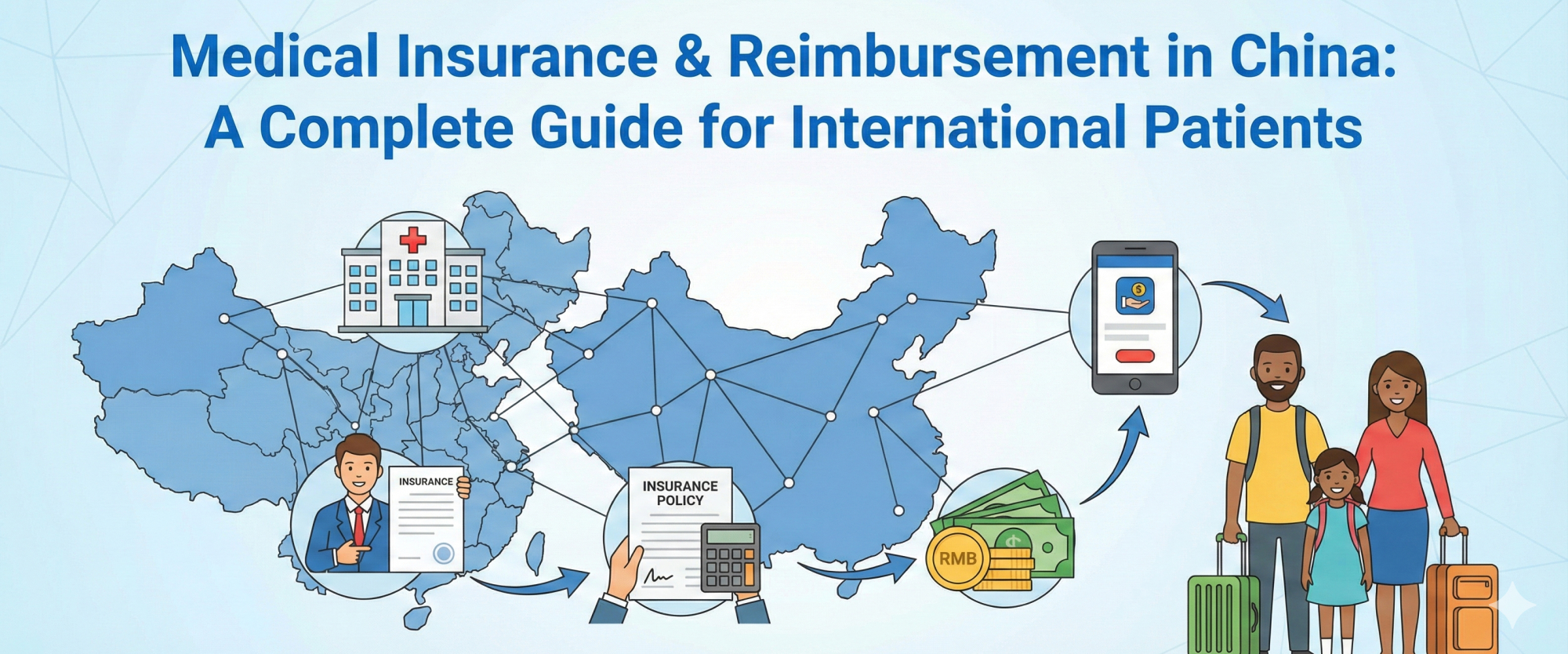
If you are planning to receive medical care in China—whether for a scheduled procedure, a specialist consultation, or ongoing treatment—understanding how the country’s healthcare financing system operates is essential.
China’s medical insurance landscape is multi-layered, encompassing both public social health insurance and private commercial plans. For foreign nationals, the rules differ significantly based on residency status, employment, and the type of medical facility visited. This comprehensive guide breaks down exactly what you need to know to navigate insurance coverage and the reimbursement process during your medical journey in China.
1. China’s Public Healthcare System: Structure and Eligibility
China’s basic medical insurance operates under a national policy framework and is implemented through local (provincial and municipal) medical security administrations. The system relies on two primary programs:
- Urban Employee Basic Medical Insurance (UEBMI): Covers formally employed urban residents and eligible foreign workers. It is jointly funded by mandatory employer and employee contributions.
- Urban-Rural Resident Basic Medical Insurance (URRBMI): Covers non-employed residents, children, and rural populations, funded primarily through personal premiums and government subsidies.
Are Foreign Nationals Eligible for Public Insurance?
Eligibility mainly depends on your status in China—especially whether you are enrolled through employment or another approved pathway.
- Employed Expatriates: Foreigners working in China with a valid work permit are legally required to enroll in the local social insurance system, which includes basic medical insurance. Note: This enrollment process was further streamlined on December 1, 2024, when the Ministry of Human Resources and Social Security ntegrated the Foreigner’s Work Permit directly into a unified Social Security Card—available in both physical and digital versions—known as the ‘Join in Card’, streamlining the mandatory enrollment process.
- Permanent Residents: Holders of the Foreigner’s Permanent Residence Identity Card generally follow the same local enrollment and benefit rules applicable to the statutory medical insurance scheme in their place of residence.
- Short-Term Visitors & Medical Tourists: Visitors on tourist, business, or short-term medical visas are not eligible for publicly financed health insurance. All medical costs must be covered out-of-pocket or through international private medical insurance.
2. Public Insurance Reimbursement Rates and Hospital Tiers
If you are enrolled in China’s public insurance, reimbursement rates are not a flat percentage. China classifies its public hospitals into three administrative tiers, and the insurance system uses tiered reimbursement to encourage patients to visit primary care facilities for routine conditions.
While exact percentages and annual deductibles are determined by municipal medical insurance bureaus (and therefore vary between cities like Beijing, Shanghai, or Guangzhou), the national structure generally follows this pattern:
| Hospital Tier | Facility Type | UEBMI Estimated Reimbursement | URRBMI Estimated Reimbursement |
|---|---|---|---|
| Level 1 (Primary) | Community clinics, township health centers | 90% – 95% | 65% – 85% |
| Level 2 (Secondary) | District and county general hospitals | 70% – 80% | 60% – 70% |
| Level 3 (Tertiary) | Major city hospitals, national teaching hospitals | 60% – 80% | 50% – 70% |
Note: Exact percentages, annual ceilings, and deductibles vary by municipality. Outpatient care generally carries a lower annual reimbursement ceiling and a lower percentage rate than inpatient hospitalizations.
The Cross-City Treatment Rule (异地就医)
If you are insured in one Chinese city but require specialist inpatient treatment in another (e.g., traveling from another city or province to Beijing for orthopedic surgery), you must complete an ‘Out-of-Area Medical Treatment Registration’ (异地就医备案) with your local medical insurance bureau in advance. Without completing this prior registration, your reimbursement rate drops significantly, or you may be required to pay entirely out-of-pocket.
3. Bilateral Social Security Agreements
Expatriates dispatched to China by foreign employers often inquire about bilateral treaties to avoid dual social security contributions. China has signed bilateral social security agreements with 12 countries (including Germany, South Korea, Canada, Switzerland, Japan, and Spain), of which 11 are currently in force.
Crucial Exception: It is important to note that these agreements generally exempt eligible foreign workers from Pension insurance contributions. Several agreements—such as those with Germany, the Netherlands, and Spain—additionally provide exemptions from Unemployment insurance, while others (including those with Denmark, Canada, Luxembourg, and Japan) cover only Pension. The exact scope varies by country. They generally do not exempt individuals from contributing to China’s basic medical insurance. Therefore, even if you are from a treaty country, you will still be enrolled in the Chinese public medical insurance system while employed there.
4. International Commercial Insurance (IPMI)
Public insurance is designed around standard Chinese hospital formularies and public wards. For international patients seeking care at premium facilities—such as the International Departments of Level 3 public hospitals or foreign-invested private hospitals—commercial insurance is vital. These facilities offer English-language services, private rooms, and imported medications that are typically excluded from the national public reimbursement list.
In major-city international care settings, official direct-billing partner lists and insurance service pages often include global insurer brands and claims/assistance networks such as Allianz/Allianz Partners, Cigna, Bupa, Aetna, AXA, and administrators such as MSH, among others. Availability is always facility- and plan-specific.
Direct Billing vs. Pay-and-Claim
- Direct Billing: If your insurer has an agreement with the hospital, the facility will bill the insurance company directly for covered treatments. You only pay your deductible or co-pay at discharge.
- Pay-and-Claim: If your insurer is out-of-network, you must pay the hospital upfront and submit the paperwork to your insurer for reimbursement.
5. The Crucial Role of the “Fāpiào” (Official Invoice)
Whether you are using public insurance settlement or filing a private insurance claim, payment screenshots or basic receipts may not be sufficient on their own. Insurers typically require an official invoice and itemized billing, along with medical documentation.
In China, you should request the official tax invoice (Fāpiào, 发票) whenever available, along with an itemized expense list—these are commonly required for reimbursement.
Essential Documentation Checklist for Reimbursement:
- Original, stamped medical Fapiao.
- Itemized cost breakdown (费用明细单) stamped by the hospital’s financial department.
- Official medical records and discharge summaries (出院小结) signed by the attending physician.
- Diagnostic reports (lab results, imaging) and prescriptions.
Always keep the physical, original copies. Documentation requirements vary by insurer and by local procedures. Keep the original files or originals required by your insurer, and store backups (digital scans/photos) for reference. See Getting Your Insurance Documents Right: A Practical Guide to Fapiao and Medical Paperwork in China
Frequently Asked Questions (FAQ)
Can I use my home country’s domestic health insurance in China?
In many cases, domestic health insurance plans are not designed for overseas direct billing in China. Coverage and reimbursement depend on your policy terms—especially whether it includes international treatment and what documentation is required. Confirm with your insurer before traveling.
What happens if I need emergency care as a short-term visitor?
Chinese hospitals will provide emergency stabilization and life-saving treatment regardless of your insurance status. However, you are financially responsible for the care. Payment is typically required prior to non-emergency procedures or immediately upon discharge.
Can I get a refund of my public medical insurance contributions if I leave China permanently?
Rules and account structures can vary by city and by the specific type of social insurance arrangement you’re enrolled in. When leaving China permanently, some people may be able to handle the balance in certain individual accounts through local procedures, while contributions to pooled funds are generally not refundable. Before you depart, confirm the applicable process and documentation requirements with the local social insurance/medical security authority.
Are international or private hospitals covered by China’s public insurance?
It depends on the facility’s official designation. Some private hospitals are registered as “Contracted Medical Insurance Providers” (定点医疗机构) with the local government and can process public insurance for standard treatments. However, premium international departments generally operate outside the public insurance scheme. Always confirm a hospital’s public insurance status prior to registration.
What is “Huimin Bao” (惠民保)?
Huimin Bao is a city-level, government-backed supplementary commercial insurance designed to cover catastrophic medical costs that exceed the public insurance ceiling. Premiums are very low. Foreign residents are usually eligible to purchase it, provided they are actively enrolled in that specific city’s basic public medical insurance program.